
Chinese Train Breaks World Record, Hits 700 km/h in Just 2 Seconds 2026
transportation technology, China has once again pushed the boundaries of what was once considered impossible. A newly developed experimental train has reportedly broken all previous speed records by reaching an astonishing 700 kilometers per hour in just two seconds. This achievement is not merely a numerical milestone; it represents a paradigm shift in rail engineering, propulsion science, and the future of high-speed travel. As the world watches closely, this breakthrough signals China’s growing dominance in next-generation transport systems and raises important questions about how people and goods may move in the decades ahead.
A New Chapter in High-Speed Rail History
High-speed rail has long been associated with progress, efficiency, and national pride. Japan’s Shinkansen, France’s TGV, and China’s own CRH and Fuxing trains have each defined eras of rail innovation. Yet the recent Chinese achievement stands apart from conventional improvements. Accelerating to 700 km/h in just two seconds defies the limits of traditional rail physics and suggests the involvement of cutting-edge technologies far beyond standard steel-wheel-on-rail systems.
This record is not simply about top speed. Acceleration is the true story. Reaching such velocity in a matter of seconds implies unprecedented control over thrust, stability, and energy management. It is this rapid acceleration that makes the achievement revolutionary and places it closer to aerospace engineering than classic railway development.
The Technology Behind the Record
At the heart of this breakthrough lies a combination of magnetic levitation (maglev), advanced propulsion systems, and artificial intelligence-driven control mechanisms. While conventional trains rely on wheels and tracks, this experimental Chinese train levitates above its guideway, eliminating friction almost entirely. By removing physical contact, engineers drastically reduce energy loss and mechanical wear, allowing for extreme speeds and rapid acceleration.
The propulsion system is believed to be based on high-powered linear motors, which propel the train forward using electromagnetic forces rather than internal combustion or traditional electric traction. These motors generate thrust along the entire length of the guideway, enabling instant and evenly distributed acceleration Chinese Train Breaks World Record, Hits 700 km/h in Just 2 Seconds
Additionally, AI plays a crucial role. Real-time data analysis monitors vibration, alignment, air pressure, and electromagnetic stability thousands of times per second. This ensures that the train remains perfectly balanced and safe even under extreme acceleration conditions.
Engineering Challenges and Solutions
Achieving 700 km/h in two seconds is not simply a matter of adding more power. Such acceleration creates enormous forces that can affect both the vehicle and its passengers. Engineers had to solve several critical challenges:
Structural Integrity:
The train’s body must withstand intense stress without deformation. Advanced composite materials, similar to those used in spacecraft and fighter jets, are believed to have been used to maintain strength while keeping weight to a minimum Chinese Train Breaks World Record, Hits 700 km/h in Just 2 Seconds
Aerodynamics:
At extreme speeds, air resistance becomes a major obstacle. The train’s design reportedly includes a sharply tapered nose, ultra-smooth surfaces, and airflow channels that minimize turbulence and sonic disturbances.

Thermal Management:
High-speed motion generates heat in propulsion systems and surrounding air. Advanced cooling systems, including liquid-cooled electromagnetic components, are essential to prevent overheating.
Passenger Safety:
Rapid acceleration can exert strong g-forces on the human body. Engineers are exploring adaptive seating, pressure-controlled cabins, and acceleration-smoothing algorithms to ensure comfort and safety for future commercial versions Chinese Train Breks World Record, Hits 700 km/h in Just 2 Seconds
Why This Record Matters
Breaking a speed record is impressive, but the implications of this achievement go far deeper. It demonstrates that ultra-high-speed ground transport can rival air travel for medium-distance journeys. A train capable of safely sustaining speeds close to 700 km/h could reduce travel times between major cities to minutes rather than hours.
For example, a journey that currently takes three hours by conventional high-speed rail could potentially be completed in under 30 minutes. This would transform daily commuting, business travel, and regional economic integration Chinese Train Breaks World Record, Hits 700 km/h in Just 2 Seconds
Moreover, rail transport is significantly more energy-efficient and environmentally friendly than aviation. If such technology can be scaled for commercial use, it could play a major role in reducing carbon emissions while meeting growing transportation demands.
China’s Strategic Vision
China’s investment in high-speed rail has always been about more than transportation. It reflects a broader national strategy focused on technological leadership, infrastructure development, and global influence. By setting new records, China positions itself as the world’s foremost innovator in rail technology Chinese Train Breaks World Record, Hits 700 km/h in Just 2 Seconds
The country already operates the largest high-speed rail network on Earth, connecting thousands of kilometers of track and hundreds of cities. This new achievement suggests that China is not content with maintaining leadership—it aims to redefine the future of mobility entirely.
Such breakthroughs also have export potential. As countries around the world seek sustainable and efficient transport solutions, Chinese-developed systems could become a global standard, much like earlier generations of Chinese high-speed trains.
Comparison With Global Efforts
While other nations are also working on advanced rail systems, China’s rapid progress stands out. Japan continues to develop its SCMaglev, which has achieved impressive speeds, but widespread commercial deployment remains limited. Europe focuses heavily on incremental improvements and cross-border interoperability rather than radical leaps.
In contrast, China’s approach emphasizes large-scale experimentation, rapid prototyping, and state-backed funding. This allows engineers to test bold ideas quickly and refine them at an unprecedented pace. The 700 km/h milestone is a clear result of this strategy.
Environmental and Economic Impact
From an environmental perspective, ultra-high-speed trains could significantly reduce reliance on short-haul flights, which are among the most carbon-intensive forms of travel. Electric maglev systems, especially when powered by renewable energy, offer a cleaner alternative with lower long-term emissions Chinese Train Breaks World Record, Hits 700 km/h in Just 2 Seconds
Economically, faster transport reshapes labor markets and urban planning. Cities once considered too distant for daily commuting could become part of the same economic zone. This promotes balanced regional development and reduces pressure on overcrowded мегacities.
However, the cost of building and maintaining such advanced infrastructure remains high. Specialized tracks, power systems, and safety mechanisms require massive upfront investment. The challenge will be to balance technological ambition with economic practicality.
From Experiment to Reality
Despite the excitement, it is important to note that this record-setting run was conducted under controlled experimental conditions. Commercial deployment will require years of testing, regulatory approval, and public acceptance. Engineers must prove not only that the technology works, but that it is reliable, affordable, and safe for everyday use Chinese Train Breaks World Record, Hits 700 km/h in Just 2 Seconds
Scaling from a test track to a nationwide network involves addressing land use, energy supply, maintenance logistics, and integration with existing transport systems. Yet China’s track record suggests that what begins as an experiment often becomes reality sooner than expected.
Public Reaction and Global Attention
News of the record has sparked widespread interest both domestically and internationally. Social media platforms, technology forums, and academic circles are buzzing with discussions about the feasibility and implications of such speeds. Many see it as a glimpse into a future where distance becomes almost irrelevant.
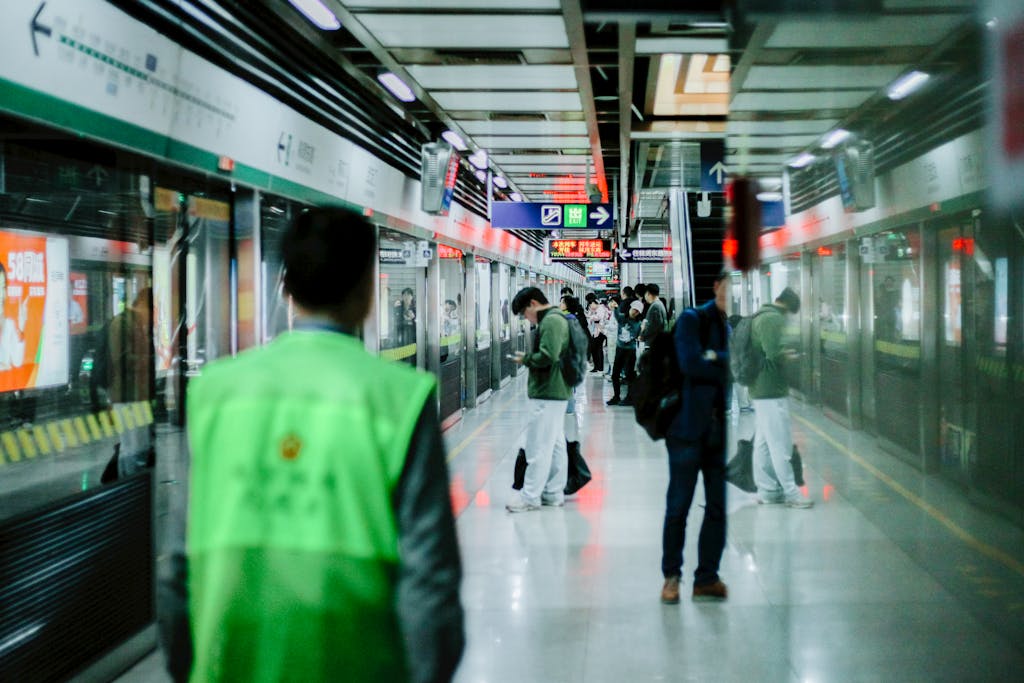
At the same time, some experts urge caution, emphasizing the need for transparency, independent verification, and rigorous safety testing. Healthy skepticism is part of scientific progress, and ongoing evaluation will determine how transformative this achievement truly is.
The Future of High-Speed Travel
Looking ahead, the implications of this breakthrough extend beyond trains. Technologies developed for ultra-fast rail can influence other sectors, including aerospace, renewable energy, and smart infrastructure. Advanced materials, AI control systems, and electromagnetic propulsion may find applications far beyond transportation.
If China succeeds in commercializing this technology, it could usher in a new era where ground travel rivals or even surpasses air travel in speed, comfort, and sustainability. The idea of breakfast in one city and lunch hundreds of kilometers away may soon become routine rather than remarkable Chinese Train Breaks World Record, Hits 700 km/h in Just 2 Seconds
Conclusion
The report of a Chinese train reaching 700 km/h in just two seconds marks a historic moment in the evolution of transportation. It reflects not only technical brilliance but also a bold vision for the future of mobility. While challenges remain before such speeds become part of everyday life, the achievement sends a clear message: the limits of ground transportation are being rewritten.
As research continues and real-world applications draw closer, this breakthrough may one day be remembered as the moment when high-speed rail entered a new dimension. Whether as a technological showcase or a foundation for future networks, China’s record-setting train has undeniably reshaped the conversation about what is possible on rails Chinese Train Breaks World Record, Hits 700 km/h in Just 2 Seconds
25 FAQs on China’s Record-Breaking Maglev Train Test
- What world record did the Chinese maglev train break?
The test vehicle achieved acceleration from 0 to 700 km/h in just under 2 seconds, setting a new record for the fastest acceleration in a superconducting electric maglev system Chinese Train Breaks World Record, Hits 700 km/h in Just 2 Seconds - When did this record-breaking test occur?
The test was conducted recently, with reports emerging in late December 2025, building on a previous test in January 2025 that reached 648 km/h. - What type of vehicle was used in the test?
It was a 1-tonne (approximately 1,000 kg) test vehicle, resembling a chassis, not a full passenger train Chinese Train Breaks World Record, Hits 700 km/h in Just 2 Seconds - What technology powers this maglev train?
It uses superconducting electric maglev technology, including high-field superconducting magnets for levitation, electromagnetic propulsion, electric suspension guidance, and transient high-power energy storage systems. - How long was the test track?
The test was performed on a 400-meter track. - Who conducted the test?
Researchers at China’s National University of Defence Technology led the project, with over a decade of development. - Is this faster than previous maglev records?
Yes, it surpasses China’s earlier record of 648 km/h on the same track and other global maglev speeds, like Japan’s 603 km/h test in 2015. - How does the acceleration compare to everyday experiences?
The acceleration is around 97 m/s², or about 10 times Earth’s gravity (10g), far beyond what passenger vehicles or even fighter jets typically experience. - Was the vehicle stopped safely after the test?
Yes, the test demonstrated safe deceleration, bringing the vehicle to a halt without issues. - What are the potential applications beyond trains?
The technology could be used for rocket launches, aviation take-offs with reduced fuel, and high-speed flight simulations - How does this maglev differ from traditional bullet trains?
Unlike wheel-based bullet trains, maglev uses magnetic levitation to eliminate friction, reducing noise, vibration, and wear for higher speeds. - What is the top speed goal for future maglev systems in China?
Researchers aim for speeds over 1,000 km/h, potentially in low-vacuum pipelines similar to hyperloop concepts. - Where was the test conducted?
Specific location details weren’t disclosed, but it was on a specialized 400-meter maglev track in China Chinese Train Breaks World Record, Hits 700 km/h in Just 2 Seconds - How long has China been developing maglev technology?
China has been working on maglev since developing its first manned single-bogie train nearly 30 years ago, making it the third country to master the tech Chinese Train Breaks World Record, Hits 700 km/h in Just 2 Seconds - What organizations collaborated on related projects?
Besides the National University of Defence Technology, collaborators include the Third Research Academy of China Aerospace Science and Industry Corporation, North University of China, CRRC Qingdao Sifang, and Southwest Jiaotong University Chinese Train Breaks World Record, Hits 700 km/h in Just 2 Seconds - Is this technology ready for passenger use?
No, this was a proof-of-concept test for ultra-high-speed systems; practical passenger applications would require longer tracks and safety enhancements. - What visual effects were observed during the test?
The vehicle moved so fast it appeared to disappear, leaving a misty trail behind due to the rapid acceleration. - How does this compare to the Shanghai Maglev?
The operational Shanghai Maglev tops out at 431 km/h, while this test focused on extreme acceleration rather than sustained speed Chinese Train Breaks World Record, Hits 700 km/h in Just 2 Seconds - What are the environmental benefits of maglev trains?
They produce less noise and vibration, have lower energy consumption at high speeds due to no friction, and could reduce reliance on fossil fuels in transportation. - Could this lead to hyperloop-style systems?
Yes, the breakthrough supports development of vacuum-sealed tubes for inter-city travel at supersonic speeds, connecting distant cities in minutes. - What challenges were overcome in this test?
Key challenges included ultra-high-speed propulsion, stable guidance, high-power energy management, and generating strong magnetic fields. - Is this the fastest train in the world?
For acceleration, yes; for top sustained speed, China’s CR450 prototype reached 450 km/h in tests, but maglev concepts aim higher Chinese Train Breaks World Record, Hits 700 km/h in Just 2 Seconds - What role does superconductivity play?
Superconducting magnets allow for stronger, more efficient magnetic fields at low temperatures, enabling levitation and propulsion with minimal energy loss Chinese Train Breaks World Record, Hits 700 km/h in Just 2 Seconds - Are there plans for longer test tracks?
Yes, a 2-km low-vacuum pipeline in Datong is under development for testing speeds up to 1,000 km/h. - How might this impact global transportation?
It positions China as a leader in ultra-high-speed rail, potentially revolutionizing long-distance travel, reducing travel times, and influencing aerospace and defense applications worldwide Chinese Train Breaks World Record, Hits 700 km/h in Just 2 Seconds
ALSO READ MORELatest Jobs News by NewsArena.tech — The Complete 2025 Career Guide